Two security researchers have discovered that Apple’s iPhone keeps track of a user’s location and saves that information to a file that is stored both on the device and on a user’s computer when they sync or back it up in iTunes.
The researchers, Pete Warden and Alasdair Allan, discovered the hidden file while collaborating on a potential data visualization project. “At first we weren’t sure how much data was there, but after we dug further and visualised the extracted data, it became clear that there was a scary amount of detail on our movements,” Warden told The Guardian.
What Does the Data Say
The data, which is stored as a log in a file called “consolidation.db,” contains longitude and latitude coordinates along with a timestamp. Right now, it appears that Apple has been recording this information since iOS 4.0 was released last June. Allan and Warden think that this information is determined by cell-tower triangulation. Although it isn’t always exact, it can give a very detailed overview of where an individual (or their phone) has traveled over a period of time.
Visualizing the Data
Beyond simply revealing that this data is available and, with a little work, accessible, Warden and Allan created a web app that can create a visualization of a user’s location information from an iPhone or 3G iPad.
Warden and Allan are not the first two data scientists to uncover this data store. However, they have created the most layperson accessible proof of concept that can showcase how this data could potentially be used.
What Does this Mean
As Warden and Allan make clear, right now, there is no evidence that the data ever leaves the user’s custody or that it is transmitted to anyone else. In other words, for someone to access this information, they need physical access to your phone or your computer with data backups, along with the wherewithal to actually use it.
The bigger question is: why does this data exist in the first place? Moreover, why is this data not encrypted within a backup? Sure, users can choose to encrypt their iPhone backups, but this is the type of file that strikes us as being encryption-worthy from the start.
Realistically speaking, the likelihood that this data could be used for evil is miniscule. We would be far more troubled if this information was accessible to other apps or was sent to Apple. Having said that, its very existence raises questions that Apple should be forced to address.
by Christina Warren
Wednesday, April 20, 2011

Surveillance Society: Negative Aspects Of Government Data Mining
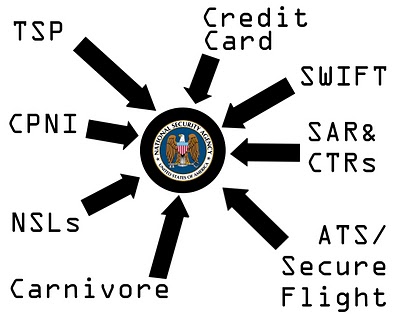
Surveillance Society. We already know that the government and private entities collect a vast amount of personal data about our everyday activities. Previously I commented about the dangers and intrusion of private entities maintaining transactional databases and having access to this wealth of personal information. It is also dangerous and intrusive for government entities to have access to this information without meeting the requirements for a search warrant. Critical to understanding why it is dangerous for governments to have this information is knowing how it is collected and what they are doing with it.
Read more
Michigan State Police download cell phone data during routine traffic stop
The year may be 2011 in the rest of the country, but in Michigan it is 1984 all over again. State police there have been using a high-tech "toy" that enables them to extract information from the cell phones of motorists stopped for routine traffic violations.
The device, the CelleBrite UFED, is capable of grabbing photos, video, and GPS data from an iPhone in as little as 90 seconds. It is compatible with 3000 different models of phone and can even circumvent password protection. The gadget would be impressive if its use weren’t so frightening, not to mention a frontal assault on the Fourth Amendment, which protects Americans against unreasonable searches and seizures.
The American Civil Liberties Union has long known about the UFEDs, which have been in use since before 2008. In that year, the ACLU filed a request for records on the program, including logs of how the devices had been used. The state police replied that the information would be made available in return for a “processing fee” of $544,680.
Last week, the Michigan ACLU accused state officials of stonewalling freedom of information requests for information on the program. An attorney for the organization, Mark Fancher, wrote:
"With certain exceptions that do not apply here, a search cannot occur without a warrant in which a judicial officer determines that there is probable cause to believe that the search will yield evidence of criminal activity. A device that allows immediate, surreptitious intrusion into private data creates enormous risks that troopers will ignore these requirements to the detriment of the constitutional rights of persons whose cell phones are searched."
Francher told a Detroit TV station that law enforcement officers encourage citizens to cooperate if they have nothing to hide, adding:
"This should be something that they [the state police] are handing over freely, and that they should be more than happy to share with the public—the routines and the guidelines that they follow."
The device, the CelleBrite UFED, is capable of grabbing photos, video, and GPS data from an iPhone in as little as 90 seconds. It is compatible with 3000 different models of phone and can even circumvent password protection. The gadget would be impressive if its use weren’t so frightening, not to mention a frontal assault on the Fourth Amendment, which protects Americans against unreasonable searches and seizures.
The American Civil Liberties Union has long known about the UFEDs, which have been in use since before 2008. In that year, the ACLU filed a request for records on the program, including logs of how the devices had been used. The state police replied that the information would be made available in return for a “processing fee” of $544,680.
Last week, the Michigan ACLU accused state officials of stonewalling freedom of information requests for information on the program. An attorney for the organization, Mark Fancher, wrote:
"With certain exceptions that do not apply here, a search cannot occur without a warrant in which a judicial officer determines that there is probable cause to believe that the search will yield evidence of criminal activity. A device that allows immediate, surreptitious intrusion into private data creates enormous risks that troopers will ignore these requirements to the detriment of the constitutional rights of persons whose cell phones are searched."
Francher told a Detroit TV station that law enforcement officers encourage citizens to cooperate if they have nothing to hide, adding:
"This should be something that they [the state police] are handing over freely, and that they should be more than happy to share with the public—the routines and the guidelines that they follow."
Alleged police brutality victim denies provoking officer
SoC Editor: Again police brutatily is brought to light thanks to an incident being captured on footage. Its important that citizens record and film police at every opportunity, as this is our best defense against police abuse of power. It is your right to film and record police, never leave yourself unprotected.
April 19, 2011 (CHICAGO) (WLS) -- A teenager repeatedly struck by a Chicago police sergeant who has been charged with two felonies denies doing anything to provoke the officer.
"I don't respect police now after that. That was a bad experience for me," Greg Jeffries told ABC7.
The 19-year-old says the incident was his most serious and most scarring run-in with police.
In October, officers responded to reports of teens causing trouble at a fast food restaurant at 79th and Vincennes. They cuffed Jeffries and some friends. Then a surveillance camera captured a police sergeant slapping the handcuffed 19-year-old several times. The hits were hard enough to knock Jeffries against a police car.
"I really couldn't do anything, I was in cuffs. He wasn't saying anything when he was hitting me. My reaction, I was just surprised. I was shocked," said Jeffries. "The other officers, they were just standing there like bystanders, like it was an everyday thing."
The sergeant, now identified as Ed Howard Jr., is charged with aggravated battery and official misconduct. Prosecutors say Jeffries did nothing to provoke the policeman. But Sergeant Howard's attorney said last week the hits were justified.
"If someone's attempting to spit on you, of course you have a right to defend yourself," said Robert Kuzas, Howard's attorney.
When asked if he threatened to spit on Howard, Jeffries said, "No, I was being respectful. There was no threat to spit, no cursing, none of that."
Jeffries has now slapped the sergeant and the Chicago Police Department with a federal lawsuit. He says the lawsuit was made possible by surveillance tape.
"No, without the video, I don't think it wouldn't have made it this far," said Jeffries. You don't think anyone would have believed you? No, not at all."
Interim Police Superintedent Terry Hillard said last week, "as supervisors, sergeants should set examples of character and conduct." He called failure to do so "inexcusable."
Jeffries was originally charged with trespassing at the fast food restaurant. That charge was later dropped.
April 19, 2011 (CHICAGO) (WLS) -- A teenager repeatedly struck by a Chicago police sergeant who has been charged with two felonies denies doing anything to provoke the officer.
"I don't respect police now after that. That was a bad experience for me," Greg Jeffries told ABC7.
The 19-year-old says the incident was his most serious and most scarring run-in with police.
In October, officers responded to reports of teens causing trouble at a fast food restaurant at 79th and Vincennes. They cuffed Jeffries and some friends. Then a surveillance camera captured a police sergeant slapping the handcuffed 19-year-old several times. The hits were hard enough to knock Jeffries against a police car.
"I really couldn't do anything, I was in cuffs. He wasn't saying anything when he was hitting me. My reaction, I was just surprised. I was shocked," said Jeffries. "The other officers, they were just standing there like bystanders, like it was an everyday thing."
The sergeant, now identified as Ed Howard Jr., is charged with aggravated battery and official misconduct. Prosecutors say Jeffries did nothing to provoke the policeman. But Sergeant Howard's attorney said last week the hits were justified.
"If someone's attempting to spit on you, of course you have a right to defend yourself," said Robert Kuzas, Howard's attorney.
When asked if he threatened to spit on Howard, Jeffries said, "No, I was being respectful. There was no threat to spit, no cursing, none of that."
Jeffries has now slapped the sergeant and the Chicago Police Department with a federal lawsuit. He says the lawsuit was made possible by surveillance tape.
"No, without the video, I don't think it wouldn't have made it this far," said Jeffries. You don't think anyone would have believed you? No, not at all."
Interim Police Superintedent Terry Hillard said last week, "as supervisors, sergeants should set examples of character and conduct." He called failure to do so "inexcusable."
Jeffries was originally charged with trespassing at the fast food restaurant. That charge was later dropped.
Yemeni Police Kill Three As Protests Escalate
Two people were killed and nearly 100 hit by bullets in the capital Sanaa, as police tried to prevent protesters marching towards the home of vice president Abd-Rabbu Mansour Hadi. Demonstrators threw stones at the anti-riot police and set fire to one security vehicle, witnesses said.
Read more
Read more
Russian police arrest 10 activists for highway protest
SoC editor: More news from our Russian friends struggling to save the Khimki old growth forest.
MOSCOW (AFP) – Russian police on Tuesday arrested 10 activists who were trying to stop logging in a Moscow forest for wood to be used to build a disputed highway, an environmental group said.
“About 10 Khimki forest activists who tried to stop illegal logging… were detained by the police,” the movement to defend the Khimki forest said in a statement.
The group’s coordinator Yevgenia Chirikova wrote in her Twitter blog that riot troops and local policemen beat and handcuffed some of the activists at the site near Moscow’s Sheremetyevo airport.
A video from the scene showed a police colonel announcing on a megaphone that the gathering of about 20 people was illegal but the activists said they wanted to check the loggers’ documents permitting the work.
Police then rounded them up and bundled them in a van, the video showed.
Chirikova’s campaign against the Khimki highway has gained popular support. A huge rally was staged last summer, led by rock singer Yury Shevchuk, and President Dmitry Medvedev responded by temporarily shelving the project.
But the Russian government decided late last year that the first modern highway between Moscow and Saint Petersburg should go ahead, despite destroying around 100 hectares (247 acres) of trees.
MOSCOW (AFP) – Russian police on Tuesday arrested 10 activists who were trying to stop logging in a Moscow forest for wood to be used to build a disputed highway, an environmental group said.
“About 10 Khimki forest activists who tried to stop illegal logging… were detained by the police,” the movement to defend the Khimki forest said in a statement.
The group’s coordinator Yevgenia Chirikova wrote in her Twitter blog that riot troops and local policemen beat and handcuffed some of the activists at the site near Moscow’s Sheremetyevo airport.
A video from the scene showed a police colonel announcing on a megaphone that the gathering of about 20 people was illegal but the activists said they wanted to check the loggers’ documents permitting the work.
Police then rounded them up and bundled them in a van, the video showed.
Chirikova’s campaign against the Khimki highway has gained popular support. A huge rally was staged last summer, led by rock singer Yury Shevchuk, and President Dmitry Medvedev responded by temporarily shelving the project.
But the Russian government decided late last year that the first modern highway between Moscow and Saint Petersburg should go ahead, despite destroying around 100 hectares (247 acres) of trees.
Tuesday, April 19, 2011
More Black Men in U.S. Prison System Than Enslaved in 1850
"More African American men are in prison or jail, on probation or parole than were enslaved in 1850, before the Civil War began," Michelle Alexander told a standing room only house at the Pasadena Main Library this past Wednesday, the first of many jarring points she made in a riveting presentation.
Alexander, currently a law professor at Ohio State, had been brought in to discuss her year-old bestseller, The New Jim Crow: Mass Incarceration in the Age of Colorblindness, More Black Men Now in Prison System than Enslaved in 1850. Interest ran so high beforehand that the organizers had to move the event to a location that could accommodate the eager attendees. That evening, more than 200 people braved the pouring rain and inevitable traffic jams to crowd into the library's main room, with dozens more shuffled into an overflow room, and even more latecomers turned away altogether. Alexander and her topic had struck a nerve.
Growing crime rates over the past 30 years don't explain the skyrocketing numbers of black - and increasingly brown - men caught in America's prison system, according to Alexander, who clerked for Supreme Court Justice Harry Blackmun after attending Stanford Law. "In fact, crime rates have fluctuated over the years and are now at historical lows."
"Most of that increase is due to the War on Drugs, a war waged almost exclusively in poor communities of color," she said, even though studies have shown that whites use and sell illegal drugs at rates equal to or above blacks. In some black inner-city communities, four of five black youth can expect to be caught up in the criminal justice system during their lifetimes.
As a consequence, a great many black men are disenfranchised, said Alexander - prevented because of their felony convictions from voting and from living in public housing, discriminated in hiring, excluded from juries, and denied educational opportunities.
"What do we expect them to do?" she asked, who researched her ground-breaking book while serving as Director of the Racial Justice Project at the [American Civil Liberties Union] of Northern California. "Well, seventy percent return to prison within two years, that's what they do."
Organized by the Pasadena Public Library and the Flintridge Center, with a dozen or more co-sponsors, including the ACLU Pasadena/Foothills Chapter and Neighborhood Church, and the LA Progressive as the sole media sponsor, the event drew a crowd of the converted, frankly - more than two-thirds from Pasadena's well-established black community and others drawn from activists circles. Although Alexander is a polished speaker on a deeply researched topic, little she said stunned the crowd, which, after all, was the choir. So the question is what to do about this glaring injustice.
Married to a federal prosecutor, Alexander briefly touched on the differing opinion in the Alexander household. "You can imagine the arguments we have," Alexander said in relating discussions she has with her husband. "He thinks there are changes we can make within the system," she said, agreeing that there are good people working on the issues and that improvements can be made. "But I think there has to be a revolution of some kind."
However change is to come, a big impediment will be the massive prison-industrial system.
"If we were to return prison populations to 1970 levels, before the War on Drugs began," she said. "More than a million people working in the system would see their jobs disappear."
So it's like America's current war addiction. We have built a massive war machine - one bigger than all the other countries in the world combined - with millions of well-paid defense industry jobs and billions of dollars at stake. With a hammer that big, every foreign policy issue looks like a nail - another bomb to drop, another country to invade, another massive weapons development project to build.
Similarly, with such a well-entrenched prison-industrial complex in place - also with a million jobs and billions of dollars at stake - every criminal justice issue also looks like a nail - another prison sentence to pass down, another third strike to enforce, another prison to build in some job-starved small town, another chance at a better life to deny.
Alexander, who drew her early inspiration from Dr. Martin Luther King Jr., devotes the last part of "The New Jim Crow" to steps people can take to combat this gross injustice. In particular, she recommended supporting the Drug Policy Alliance.
By Dick Price; April 18, 2011 - Znet
Alexander, currently a law professor at Ohio State, had been brought in to discuss her year-old bestseller, The New Jim Crow: Mass Incarceration in the Age of Colorblindness, More Black Men Now in Prison System than Enslaved in 1850. Interest ran so high beforehand that the organizers had to move the event to a location that could accommodate the eager attendees. That evening, more than 200 people braved the pouring rain and inevitable traffic jams to crowd into the library's main room, with dozens more shuffled into an overflow room, and even more latecomers turned away altogether. Alexander and her topic had struck a nerve.
Growing crime rates over the past 30 years don't explain the skyrocketing numbers of black - and increasingly brown - men caught in America's prison system, according to Alexander, who clerked for Supreme Court Justice Harry Blackmun after attending Stanford Law. "In fact, crime rates have fluctuated over the years and are now at historical lows."
"Most of that increase is due to the War on Drugs, a war waged almost exclusively in poor communities of color," she said, even though studies have shown that whites use and sell illegal drugs at rates equal to or above blacks. In some black inner-city communities, four of five black youth can expect to be caught up in the criminal justice system during their lifetimes.
As a consequence, a great many black men are disenfranchised, said Alexander - prevented because of their felony convictions from voting and from living in public housing, discriminated in hiring, excluded from juries, and denied educational opportunities.
"What do we expect them to do?" she asked, who researched her ground-breaking book while serving as Director of the Racial Justice Project at the [American Civil Liberties Union] of Northern California. "Well, seventy percent return to prison within two years, that's what they do."
Organized by the Pasadena Public Library and the Flintridge Center, with a dozen or more co-sponsors, including the ACLU Pasadena/Foothills Chapter and Neighborhood Church, and the LA Progressive as the sole media sponsor, the event drew a crowd of the converted, frankly - more than two-thirds from Pasadena's well-established black community and others drawn from activists circles. Although Alexander is a polished speaker on a deeply researched topic, little she said stunned the crowd, which, after all, was the choir. So the question is what to do about this glaring injustice.
Married to a federal prosecutor, Alexander briefly touched on the differing opinion in the Alexander household. "You can imagine the arguments we have," Alexander said in relating discussions she has with her husband. "He thinks there are changes we can make within the system," she said, agreeing that there are good people working on the issues and that improvements can be made. "But I think there has to be a revolution of some kind."
However change is to come, a big impediment will be the massive prison-industrial system.
"If we were to return prison populations to 1970 levels, before the War on Drugs began," she said. "More than a million people working in the system would see their jobs disappear."
So it's like America's current war addiction. We have built a massive war machine - one bigger than all the other countries in the world combined - with millions of well-paid defense industry jobs and billions of dollars at stake. With a hammer that big, every foreign policy issue looks like a nail - another bomb to drop, another country to invade, another massive weapons development project to build.
Similarly, with such a well-entrenched prison-industrial complex in place - also with a million jobs and billions of dollars at stake - every criminal justice issue also looks like a nail - another prison sentence to pass down, another third strike to enforce, another prison to build in some job-starved small town, another chance at a better life to deny.
Alexander, who drew her early inspiration from Dr. Martin Luther King Jr., devotes the last part of "The New Jim Crow" to steps people can take to combat this gross injustice. In particular, she recommended supporting the Drug Policy Alliance.
By Dick Price; April 18, 2011 - Znet
Police must rethink protest strategy
The country's public order policing units have to revise the way they deal with community protests, as service delivery protests continue to break out ahead of municipal elections next month.
The Institute for Security Studies has been responding to the death of community protestor, Andries Tatane, at Ficksburg in the Free State last week.
Tatane was brutally beaten and was shot at close range with rubber bullets during a protest over crippling water shortages last week. Six policemen are standing trial for the killing.
A spokesperson for the Institute, Gareth Newman, says clashes between police and communities at protests around the country are becoming an all too familiar sight. He says this is possibly because police are failing to remain calm and neutral during protests.
"They are starting to see communities as the enemy, they are not seeing themselves as neutral arbitrators in public protests," he said.
"So, what we saw in Ficksburg recently was a growing tendency for these units to look at protestors as people that need to be subdued, as the enemy that needs to be violently suppressed. That is in line with the way that political leadership in this country is talking about policing. It is no longer a service, there to protect the community - it is now a force to fight the enemy."
Meanwhile, National Police Commissioner Bheki Cele is visiting Tatane's family in Ficksburg today.
By Thrishni Subramoney
The Institute for Security Studies has been responding to the death of community protestor, Andries Tatane, at Ficksburg in the Free State last week.
Tatane was brutally beaten and was shot at close range with rubber bullets during a protest over crippling water shortages last week. Six policemen are standing trial for the killing.
A spokesperson for the Institute, Gareth Newman, says clashes between police and communities at protests around the country are becoming an all too familiar sight. He says this is possibly because police are failing to remain calm and neutral during protests.
"They are starting to see communities as the enemy, they are not seeing themselves as neutral arbitrators in public protests," he said.
"So, what we saw in Ficksburg recently was a growing tendency for these units to look at protestors as people that need to be subdued, as the enemy that needs to be violently suppressed. That is in line with the way that political leadership in this country is talking about policing. It is no longer a service, there to protect the community - it is now a force to fight the enemy."
Meanwhile, National Police Commissioner Bheki Cele is visiting Tatane's family in Ficksburg today.
By Thrishni Subramoney
Royal wedding: police consider pre-emptive arrests

Police cannot rule out pre-emptive strikes against anarchists plotting to disrupt the royal wedding, Scotland Yard has said.
In one of the biggest security operations in the history of the Metropolitan police, just under 5,000 police officers - including armed and undercover teams - will be on duty on 29 April in the city of Westminster and around the centre of London.
So far, two groups have indicated that they wish to protest: Muslims against Crusades, who asked to demonstrate outside Westminster Abbey but were refused permission, and the English Defence League. The EDL indicated it would mount a demonstration if Muslims against Crusades did so.
Sixty individuals who have been arrested at past demonstrations, such as the TUC anti-cuts protest and the student demonstration against the introduction of fees, have been banned from the city of Westminster as part of their bail conditions. Action will be taken against them if they enter the city on the day.
In addition, the Met is working with forces across the country and is using "spotters" to identify those within the so-called "black bloc" of anarchists intent on causing trouble.
Should evidence emerge that groups are planning to commit criminal acts, pre-emptive action will be taken, a Scotland Yard spokesman said. This could range from breaking up a squat where individuals are gathered, under breach of the peace legislation, or moving in to break up and arrest individuals if evidence suggests they are conspiring to commit criminal acts.
"It is very difficult to build an intelligence picture, but we cannot rule out pre-emptive action," said the spokesman.
Assistant commissioner Lynne Owens, who is head of public order at Scotland Yard, said: "If anyone comes to London on the day of the royal wedding intending to commit criminal acts, we will act quickly, robustly and decisively so that it is a safe and happy environment for everyone else, who wishes to be here and celebrate."
The Met is also getting intelligence from the Fixated Threat Assessment Centre, a police unit set up in 2006 together with mental health agencies to identify individuals who are obsessed with members of the royal family, politicians or celebrities. Details of a handful of people are understood to have been passed on to police officers.
Under the Serious Organised Crime Act 2005, the area around the houses of parliament and Westminster Abbey is designated an exclusion zone where unauthorised demonstrations are not allowed.
An early conversation between Owens and Muslims against Crusades has been held. The refusal of permission to demonstrate outside the abbey does not prevent them from protesting elsewhere, but Owens warned that any action to burn the union flag would be seen as an offence under the Public Order Act.
Owens said there was no intelligence to suggest a terrorist threat to the wedding, so police were not planning at this stage to use stop-and-search powers under the new section 47a of the Terrorism Act. This section replaces section 44, which was found to be illegal under European law.
She said it was likely that searches would be carried out under the two other powers available to police: section one of the Police and Criminal Evidence Act and Section 60 of the Criminal Justice Act 1996. The latter allows police to designate an area a section 60 zone, in which officers are able to stop and search individuals without requiring evidence of wrongdoing.
A decision on how wide the section 60 area would be is likely to be made nearer the day of the wedding.
The police will be protecting 80 dignitaries, as well as the expected tens of thousands of visitors from all over the world.
A mobile unit of officers will be used to deal with any violence or unruly demonstrations outside the exclusion zone area, which covers Westminster Abbey and the route to be taken by Prince William and Kate Middleton.
Sandra Laville, Guardian
Monday, April 18, 2011
Police get rough on Anti-Corporate Toronto University Demo
The following updates relate to a demonstration that took place today's anti-coropratization and privatization rally at UofT. For more information on what the demo was about a copy of the promo material for the demo is pasted below.
At 5:25pm via Twitter:
Christarchy RT @q_e_d: Police blocking doors to #UofT governing council meeting to hundreds of students/workers/community & Noam Chomsky.
At 5:30pm via TMC member:
Shit is going down at the Uof T action as we speak....reports are that police are beating up folks and arresting them - head to simcoe hall uoft if you can NOW
-Ali
At 5:36 via Twitter
blogUT RT @q_e_d: (Meanwhile inside GC approves tuition increase without even discussion) #UofT
blogUT RT @q_e_d: Police now aggressively attacking students outside governing council meeting #UofT
At 6pm via Twitter:
Chomsky speaking at Anti-corp and anti-munk protest in front of UofT Governing Council meeting
At 6:27pm via TMC member:
UPDATE FROM RALLY: Shortly after Chomsky spoke, students attempted to enter the GC meeting. The police blocked student from entering the meeting, assaulting one protestor to the point of drawing blood. No one was arrested.
Protesters then remained outside the chambers doors for about 1.5 hours, demanding to be let in. Apparently, it was a festive mood outside the meeting, with students drumming on random objects and dancing while they pounded on the doors :)
XXXXX will write something up tonight.. I can post to the TMC.. and hopefully, we'll get some pics as well!
The protest has now dispersed.
-Sakura
At 5:25pm via Twitter:
Christarchy RT @q_e_d: Police blocking doors to #UofT governing council meeting to hundreds of students/workers/community & Noam Chomsky.
At 5:30pm via TMC member:
Shit is going down at the Uof T action as we speak....reports are that police are beating up folks and arresting them - head to simcoe hall uoft if you can NOW
-Ali
At 5:36 via Twitter
blogUT RT @q_e_d: (Meanwhile inside GC approves tuition increase without even discussion) #UofT
blogUT RT @q_e_d: Police now aggressively attacking students outside governing council meeting #UofT
At 6pm via Twitter:
Chomsky speaking at Anti-corp and anti-munk protest in front of UofT Governing Council meeting
At 6:27pm via TMC member:
UPDATE FROM RALLY: Shortly after Chomsky spoke, students attempted to enter the GC meeting. The police blocked student from entering the meeting, assaulting one protestor to the point of drawing blood. No one was arrested.
Protesters then remained outside the chambers doors for about 1.5 hours, demanding to be let in. Apparently, it was a festive mood outside the meeting, with students drumming on random objects and dancing while they pounded on the doors :)
XXXXX will write something up tonight.. I can post to the TMC.. and hopefully, we'll get some pics as well!
The protest has now dispersed.
-Sakura
1 dead in anti nuclear plant protest
Mumbai: Jaitapur is on the boil again. Shiv Sena's day long protest in the Madban village against the proposed Nuclear Power Plant prompted a police lathi charge and triggered a mob of 500 to 600 people to attack a police station in the neighbouring Nate village. The mob set the police station on fire and police resorted to firing in defence, killing a 30-year-old protestor.
Read more
Read more
Walk to work moments
Karooro-Okurut and other like-minded Ugandans, call yourself to attention and reflect on these: the 1.7 trillion recently earmarked for the purchase of fighter jets at the cost of poor patients in Kagadi Hospital who have to trek long distances for water, let alone patients with spinal injuries at Mulago national referral hospital that abandoned their wards in February and demonstrated against lack of medical attention, and the Shs3 billion to be spent on Mr Museveni's swearing-in ceremony when hungry voters have not even a morsel to eat yet agriculture- a sector upon which many depend, is neglected and under funded. Ms Karooro-Okurut, how does the President's swearing-in positively contribute towards the improvement of people's welfare to the extent that it should be prioritised both in discussion and funding when no debates about biting hunger and deteriorating health standards are seen on Parliament's floor?
Young girl detained by police for shouting 'freedom' at rally
A terrified little girl was among 65 people detained by police at a pro-democracy rally in Baku, Azerbaijan, yesterday.
The young girl was wrenched away from her mother and bundled into a police van after she shouted "freedom" during the protest against President Ilham Aliyev.
Eye-witnesses said the girl's mother was also arrested, as were two Swedish journalists.
The rally, which had been banned, was the latest attempt by the opposition in the oil-producing ex-Soviet republic to emulate uprisings across the Middle East and north Africa.
Small protests over the past several weeks have been given short shrift by authorities, with more than 100 people being detained in April and March.
Sandwiched between Russia, Iran and Turkey, Azerbaijan is an energy supplier to Europe and a transit route for US troops in Afghanistan.
- Lada Yevgrashina in Baku
The young girl was wrenched away from her mother and bundled into a police van after she shouted "freedom" during the protest against President Ilham Aliyev.
Eye-witnesses said the girl's mother was also arrested, as were two Swedish journalists.
The rally, which had been banned, was the latest attempt by the opposition in the oil-producing ex-Soviet republic to emulate uprisings across the Middle East and north Africa.
Small protests over the past several weeks have been given short shrift by authorities, with more than 100 people being detained in April and March.
Sandwiched between Russia, Iran and Turkey, Azerbaijan is an energy supplier to Europe and a transit route for US troops in Afghanistan.
- Lada Yevgrashina in Baku
Police thwart Azerbaijan democracy rally
Police in the energy-rich former Soviet state of Azerbaijan staged a show of force yesterday to prevent an unauthorised pro-democracy rally, arresting activists who were attempting to protest.
In the latest clampdown in the mainly Muslim country where demonstrations are rarely tolerated, riot officers with batons cleared Sahir Park in central Baku, where the opposition wanted to hold the banned rally.
Few activists approached the park, but many of those who tried to do so were detained, including a woman with a young child who shouted the word "Freedom!"
The opposition said that more than 100 people were held, including two Swedish journalists who were later released, although the authorities said that 65 people had been detained.
"Today's action again demonstrated the willingness of Azerbaijani society for change, and the readiness of the authorities to prevent change," the leader of the opposition Musavat party, Isa Gambar, told AFP.
But a leading official from the governing party said that the failed protest showed that an impotent opposition had "collapsed".
"This once again shows that the people of Azerbaijan have a negative attitude towards such actions," said the offical, Mubariz Gurbanli.
Police have broken up three other small protests over the past two months, detaining dozens of opposition supporters.
The opposition had been offered a protest venue on the outskirts of the capital, but refused to hold their rally there.
In the latest clampdown in the mainly Muslim country where demonstrations are rarely tolerated, riot officers with batons cleared Sahir Park in central Baku, where the opposition wanted to hold the banned rally.
Few activists approached the park, but many of those who tried to do so were detained, including a woman with a young child who shouted the word "Freedom!"
The opposition said that more than 100 people were held, including two Swedish journalists who were later released, although the authorities said that 65 people had been detained.
"Today's action again demonstrated the willingness of Azerbaijani society for change, and the readiness of the authorities to prevent change," the leader of the opposition Musavat party, Isa Gambar, told AFP.
But a leading official from the governing party said that the failed protest showed that an impotent opposition had "collapsed".
"This once again shows that the people of Azerbaijan have a negative attitude towards such actions," said the offical, Mubariz Gurbanli.
Police have broken up three other small protests over the past two months, detaining dozens of opposition supporters.
The opposition had been offered a protest venue on the outskirts of the capital, but refused to hold their rally there.
Secret police tell parents of arrested protesters to forget their children and have some more

On March 6, 15 teenagers were arrested for scrawling graffiti in Deraa, a nondescript farming town near the Jordanian border. They had written on a wall, ‘The people want the regime to fall’ – the mantra of the Arab spring. Their parents, accompanied by a local religious leader, went to the police to plead for their release, but were told to forget about their children.
‘Go away and have some more’ was the advice.
When this provoked huge demonstrations in front of the city’s mosque, the local police chief – who happened to be the president’s thuggish cousin – ordered his forces to open fire. Five people were killed, starting a chain reaction that has led to dozens of deaths in Deraa and an uprising across Syria.
The regime initially tried a combination of concessions and repression to stop the protests. The police chief and an unpopular local governor were sacked and detainees released, but this failed to quell anger in an area where tribal concepts of honour run deep.
When some of the arrested teenagers were freed they had been tortured, with faces smashed up, burns on their bodies and fingernails pulled out.
Read more
Protest March Demanding Justice For Victims of Police Custody
Hundreds of people are marching through London today in protest at the death of reggae artist Smiley Culture.
The protestors are walking from Wandsworth Road to Scotland Yard via Parliament Square demanding “justice” for the 48-year-old, who died last month while police were searching his home.
The reggae star, real name David Emmanuel, who grew up in Tulse Hill, died of a single stab wound to the heart in the kitchen of his home in Warlingham on March 15.
The 80s star allegedly plunged a carving knife into his chest when he went to make himself a cup of tea during a police drug raid on his home.
He was on bail for conspiracy to supply cocaine at the time.
But friends and family organised the march today after questioning the circumstances of his death.
The Independent Police Complaints Commission is carrying out an inquiry.
The march organisers have said the protest is also to honour more than 400 other people who have died in police custody.
Read more
The protestors are walking from Wandsworth Road to Scotland Yard via Parliament Square demanding “justice” for the 48-year-old, who died last month while police were searching his home.
The reggae star, real name David Emmanuel, who grew up in Tulse Hill, died of a single stab wound to the heart in the kitchen of his home in Warlingham on March 15.
The 80s star allegedly plunged a carving knife into his chest when he went to make himself a cup of tea during a police drug raid on his home.
He was on bail for conspiracy to supply cocaine at the time.
But friends and family organised the march today after questioning the circumstances of his death.
The Independent Police Complaints Commission is carrying out an inquiry.
The march organisers have said the protest is also to honour more than 400 other people who have died in police custody.
Read more
Police documented hundreds on G20 weekend
TORONTO — Hundreds of citizens were documented by police in mostly non-criminal encounters during last year’s G20 summit — and their names and personal details still live on in an internal police database.
Over three days, more than 500 people were stopped, questioned and documented by Toronto police officers in key G20 patrol areas downtown and near a temporary jail location, according to an analysis of police contact card data obtained by the Toronto Star in a freedom of information request.
Police use the database as an investigative tool to connect people, places and times. For example, in the case of a homicide, detectives can enter a victim’s name and see who they associated with in the past — and where and when.
The level of “carding” was unusually high during the summit, which could be expected given the police presence.
On an average day in those areas in 2008, police documented 75 people, according to baseline data. But from June 25 to 27, 2010 — the summit weekend — the daily average was 186. That’s an increase of 150 per cent.
Sunday was the busiest day of the G20 weekend for carding; 235 people were documented.
White men were most often stopped, according to the data. This comes as little surprise to anyone who was out on the streets of downtown Toronto that weekend. Young men, particularly those dressed in dark clothing, drew heavy police attention following a rampage by a small number of violent protesters dressed in black.
Police were busy documenting people at a number of spots, including the area around the Bay Street bus terminal, where out-of-town protesters boarded buses for home, and at subway exits near Queen’s Park.
Eighty-five per cent of those documented were male, with an average age of 30. The average age of women documented was 28.
The police service had no specific comment for this story, but spokesperson Mark Pugash said Chief Bill Blair addressed the issue of police documenting citizens in a 2009 interview and that his word are “as relevant today as they were then.”
In that interview, Blair said: “We’re recording an interaction — that we’ve had contact with you — and we place limitations on what that information is used for and how it can be used.”
Blair said documenting citizens in certain, non-criminal interactions is a valuable tool and that the vast majority of the collected data is never accessed.
Police collect names, ages, names of associates, dates of birth and in some encounters place of birth. Police also note the individual’s skin colour as being white, black, brown or “other.”
The data also indicates the reason for the stop. Police choose from a list of coded reasons. The most common reason is for “general investigation,” followed by “suspicious activity.” Collecting information for the intelligence unit is another reason, albeit less frequently cited.
In most of these encounters, the people police document are not arrested or charged and are likely unaware that their personal information has become part of an internal database.
It’s important to note that the contact card data obtained by the Star does not indicate which stops were related to policing the G20, and certainly not all of them were. Encounters with panhandlers and emotionally disturbed people are also included.
But the level of carding during the summit was much higher than normal in five key G20 police patrol areas, including the Queen’s Park area, downtown pockets near the summit venues and a temporary jail on Eastern Avenue.
The data does not include any stops or documenting of citizens done by other police services involved in summit security.
Documenting citizens in non-criminal encounters is nothing new. Toronto police have been doing this for decades. Other police services do the same.
Police fill out the personal information on pocket-sized cards called Field Information Reports, and the resulting data is entered into a searchable database that is not subject to any purging requirements.
A total of 1,105 people were arrested during the G20, 113 of whom were let go at the scene with no charge. It was the largest mass arrest in Canadian history. Many who were charged saw their charges dropped or stayed.
Summit policing — overseen by an integrated security unit that included Toronto police, RCMP and OPP — has been widely criticized as heavy-handed and is the subject of numerous investigations.
A number of groups, including the Canadian Civil Liberties Association, continue to call for a full public inquiry.
Graeme Norton, director of the CCLA’s Public Safety Project, says the police carding practice and storage of personal data, in general, is worrisome.
“What happens with that information is a big question, and retaining it in a police database, accessing it for investigative purposes raises a number of very troubling issues for us,” said Norton.
“This is personal information about individuals that can be quite revealing. They may not even know it exists.”
Over three days, more than 500 people were stopped, questioned and documented by Toronto police officers in key G20 patrol areas downtown and near a temporary jail location, according to an analysis of police contact card data obtained by the Toronto Star in a freedom of information request.
Police use the database as an investigative tool to connect people, places and times. For example, in the case of a homicide, detectives can enter a victim’s name and see who they associated with in the past — and where and when.
The level of “carding” was unusually high during the summit, which could be expected given the police presence.
On an average day in those areas in 2008, police documented 75 people, according to baseline data. But from June 25 to 27, 2010 — the summit weekend — the daily average was 186. That’s an increase of 150 per cent.
Sunday was the busiest day of the G20 weekend for carding; 235 people were documented.
White men were most often stopped, according to the data. This comes as little surprise to anyone who was out on the streets of downtown Toronto that weekend. Young men, particularly those dressed in dark clothing, drew heavy police attention following a rampage by a small number of violent protesters dressed in black.
Police were busy documenting people at a number of spots, including the area around the Bay Street bus terminal, where out-of-town protesters boarded buses for home, and at subway exits near Queen’s Park.
Eighty-five per cent of those documented were male, with an average age of 30. The average age of women documented was 28.
The police service had no specific comment for this story, but spokesperson Mark Pugash said Chief Bill Blair addressed the issue of police documenting citizens in a 2009 interview and that his word are “as relevant today as they were then.”
In that interview, Blair said: “We’re recording an interaction — that we’ve had contact with you — and we place limitations on what that information is used for and how it can be used.”
Blair said documenting citizens in certain, non-criminal interactions is a valuable tool and that the vast majority of the collected data is never accessed.
Police collect names, ages, names of associates, dates of birth and in some encounters place of birth. Police also note the individual’s skin colour as being white, black, brown or “other.”
The data also indicates the reason for the stop. Police choose from a list of coded reasons. The most common reason is for “general investigation,” followed by “suspicious activity.” Collecting information for the intelligence unit is another reason, albeit less frequently cited.
In most of these encounters, the people police document are not arrested or charged and are likely unaware that their personal information has become part of an internal database.
It’s important to note that the contact card data obtained by the Star does not indicate which stops were related to policing the G20, and certainly not all of them were. Encounters with panhandlers and emotionally disturbed people are also included.
But the level of carding during the summit was much higher than normal in five key G20 police patrol areas, including the Queen’s Park area, downtown pockets near the summit venues and a temporary jail on Eastern Avenue.
The data does not include any stops or documenting of citizens done by other police services involved in summit security.
Documenting citizens in non-criminal encounters is nothing new. Toronto police have been doing this for decades. Other police services do the same.
Police fill out the personal information on pocket-sized cards called Field Information Reports, and the resulting data is entered into a searchable database that is not subject to any purging requirements.
A total of 1,105 people were arrested during the G20, 113 of whom were let go at the scene with no charge. It was the largest mass arrest in Canadian history. Many who were charged saw their charges dropped or stayed.
Summit policing — overseen by an integrated security unit that included Toronto police, RCMP and OPP — has been widely criticized as heavy-handed and is the subject of numerous investigations.
A number of groups, including the Canadian Civil Liberties Association, continue to call for a full public inquiry.
Graeme Norton, director of the CCLA’s Public Safety Project, says the police carding practice and storage of personal data, in general, is worrisome.
“What happens with that information is a big question, and retaining it in a police database, accessing it for investigative purposes raises a number of very troubling issues for us,” said Norton.
“This is personal information about individuals that can be quite revealing. They may not even know it exists.”
Friday, April 15, 2011
Officers Who Beat Man While Unconscious to be Reinstated
The officers who beat Warren would face no such punishment. First, the department attempted to cover up the beating by providing the DA’s officer with a dashcam video that had the beating edited out. When the video finally surfaced, the five officers were fired, but only two were ever criminally charged. They were eventually acquitted.
On January 23, 2008 Birmingham police officers attempted to stop and question one Anthony Shannon Warren about suspected drug activity. Warren fled in his car. Because interrogating people about suspected involvement in activities that harm no one is much more important than public safety, the officers decided that the best course of action was to endanger the lives of everyone else on the road by chasing after him. The chase ended with Warren slamming into a police cruiser, being ejected from his car, and knocked out. Five officers converged on his unconscious body and punched, kicked, and beat him with batons.
Warren would later plead guilty to first-degree assault because he nearly hit an officer with his vehicle during the chase.He was sentenced to 20 years in prison.
A few days ago, the Jefferson County Personnel Board, after a 10 minute hearing, ruled that the five officers must be reinstated. The attorney for Officer Thomas Cleveland indicated that he would seek back-pay for Cleveland.
So apparently if you’re a cop in Birmingham, not only will you not be punished for committing egregious violent crimes on completely defenseless people and attempting to cover them up, you will be given a chance to be rewarded with a nearly two year paid vacation at taxpayer expense. To top it off, you’ll be given the chance to whine to the media about how “people rushed to judge” you based on indisputable video evidence of your criminality. Where do I sign up?
--Dr. Q, Copblock
On January 23, 2008 Birmingham police officers attempted to stop and question one Anthony Shannon Warren about suspected drug activity. Warren fled in his car. Because interrogating people about suspected involvement in activities that harm no one is much more important than public safety, the officers decided that the best course of action was to endanger the lives of everyone else on the road by chasing after him. The chase ended with Warren slamming into a police cruiser, being ejected from his car, and knocked out. Five officers converged on his unconscious body and punched, kicked, and beat him with batons.
Warren would later plead guilty to first-degree assault because he nearly hit an officer with his vehicle during the chase.He was sentenced to 20 years in prison.
A few days ago, the Jefferson County Personnel Board, after a 10 minute hearing, ruled that the five officers must be reinstated. The attorney for Officer Thomas Cleveland indicated that he would seek back-pay for Cleveland.
So apparently if you’re a cop in Birmingham, not only will you not be punished for committing egregious violent crimes on completely defenseless people and attempting to cover them up, you will be given a chance to be rewarded with a nearly two year paid vacation at taxpayer expense. To top it off, you’ll be given the chance to whine to the media about how “people rushed to judge” you based on indisputable video evidence of your criminality. Where do I sign up?
--Dr. Q, Copblock
U.S. Border Pigs Taser Migrant Man Into a Coma
U.S. Customs and Border Protection agents in Arizona tased an undocumented man into a coma, and two ICE officers are currently guarding his hospital room 24 hours a day, ready to re-deport him should he recover, the LA Weekly blog reports.
When Wilson went to see her husband at the St. Joseph’s hospital in Phoenix, he was in a coma and had taser marks all over his chest and arms, two black eyes (supposedly from a head injury) and a tooth was out of place. Part of his skull has been removed to relieve pressure.
Read more
When Wilson went to see her husband at the St. Joseph’s hospital in Phoenix, he was in a coma and had taser marks all over his chest and arms, two black eyes (supposedly from a head injury) and a tooth was out of place. Part of his skull has been removed to relieve pressure.
Read more
U.S. Dictating North American Air Travel Security
Under Bill C-42, Canadian airlines are required to send traveler information through the Secure Flight Program 72 hours before departure. The Transportation Security Administration checks the data against security watch lists which could result in passengers receiving extra screening or even being barred from boarding their flight.
Read more
Read more
Portland Cops Attack Anti-Police Brutality Protest

About a dozen people were arrested Thursday night when self-described "anarchists" marched through the streets of downtown. There were no reports of injuries or property damage. Organizers of the anarchist march said they were protesting police brutality in solidarity with other anarchists around the country, particularly Seattle where the police department is being investigated by the US Department of Justice. One protestor complained that police used pepper-spray on teen girls. Violence erupts at protest against police, marchers horribly outnumbered. Before the protest even began, the police were in sure form: one officer charged a young girl and pushed her violently, leaving her bleeding from an abrasion on her knee. Her companions reported that the officer would not give them his badge number, but that his last name was "Weinberger." Another officer arrested a protester for throwing a cigarette butt in the park.
When perhaps 20 protesters had gathered, the march commenced, led by a banner reading "Every Cop A Murderer, Every Judge An Accomplice." By my best count, 30 cops pursued at this time, lining the street in blue and yellow and ordering protesters to stay on the sidewalk. The ranks of both protesters and police continued to grow quickly, swelling to 50 in black-bloc. 35+ Officers on bikes hedged the block, with 6 more on horseback and at least 7 patrol cars. A few private security guards were in attendance, sticking to the far corners and looking uncertain.
At approximately 7:40pm, at the corner of 9th & Stark, a confusing melee broke out. Pepper spray could be seen shooting high above the crowd, pushing, punching, shoving, screaming. Many protesters ran in all directions. From my vantage point the cause of the conflict was uncertain, but it was noted by several observers that both sides were agitated. I witnessed 3 arrests at this point, including a very young girl. Protesters reported her age as 14 years old. Another arrestee was not moving, nearly unconscious, and had to be carried by the police, his feet dragging behind. One officer pushed a protester violently, commanding him to remain on the sidewalk. I hope other observers make their vantage points known, as their was considerable violence I could not clearly see.
As the protesters regrouped in Obryant Park, more police arrived: 20 in full riot gear, perhaps 10 more afoot or on bikes, and at least 10 patrol cars with the sirens of many more approaching in the distance. I counted 58 officers at this time.
The 15 remaining protesters gathered their comrades and spirits and began marching around the adjacent blocks, eventually toward Pioneer Square. Concerted chants of "Fuck The Police!" and "A-C-B! All Cops are Bastards!" seemed to rattle some onlookers while others only gawked in awe. More than a few put their fists in the air in solidarity.
By 8:25 12 protesters remained, stopping briefly at Pioneer Square. At least 26 police officers continued to fence their every move. Patrol cars roared in every direction, a large paddy-wagon rolled slowly by as 20 Riot Police clung to the sides of another truck.
From this point the marchers continued down 3rd Avenue and eventually up Burnside to 12th Avenue where a wall of police greeted them, forbidding them to pass. The protesters eventually reversed their course via Stark St and returned to Pioneer Square.
By 9:30 perhaps a dozen protesters remained, holding their signs in front of the courthouse, appearing exhausted. The police began to disperse.
TSA security looks at people who complain about ... TSA security
Arrogant complaining about airport security is one indicator Transportation Security Administration officers consider when looking for possible criminals and terrorists, CNN has learned exclusively. And, when combined with other behavioral indicators, it could result in a traveler facing additional scrutiny.
"It's circular reasoning where, you know, I'm going to ask someone to surrender their rights; if they refuse, that's evidence that I need to take their rights away from them. And it's simply inappropriate," he said.
Read more
"It's circular reasoning where, you know, I'm going to ask someone to surrender their rights; if they refuse, that's evidence that I need to take their rights away from them. And it's simply inappropriate," he said.
Read more
Toronto police blames harassment victims

"Women should avoid dressing like sluts in order not to be victimized."
The Toronto Police, referring to sexual assault, recently offered us this gem. I have decided to write a letter in response.
Dear Toronto Police,
Thank you, you sexist bastards. On behalf of women everywhere, I am truly appreciative for your concern, made apparent by your identification of this issue. If we are on the receiving end of sexual assault, it is our fault. In fact, dressing "like sluts" really is an invitation to be assaulted. I know that's what we women have in mind when we choose our outfits for the evening. You have every right to blame us. Your acknowledgement that we had it coming might steer us from dressing like sluts in the future.
However, I bet you didn't expect the backlash, or you probably wouldn't have made such a ridiculous statement. I'm sure by now you know all about "SlutWalk," organized by the fine citizens of Toronto. In case you don't know, because I suspect your powers of observation and general intelligence may be a bit limited, as demonstrated by your statement, "SlutWalk" is an event in which the awesome folks of Toronto have banded together to protest the horrible proclamations you made. Some of them dress provocatively, some don't, but they all choose to wear what they wear without broadcasting that they would like to be sexually assaulted. Despite the obvious rebellion present in their dressing like sluts after you just told them not to, their response isn't so much about the "dressing like sluts" component of your statement, but the implications of what it actually means.
You see, when you say that women actively factor themselves into being sexually assaulted, you are perpetuating victimization. Even if you don't explicitly say it, you are telling women that they deserve to be raped for expressing their perceived notions of femininity. Is that the kind of message you want to send to women who have been sexually assaulted? Your statement suggests that it is. I suggest you reconsider.
You may want to think about what you've done for other reasons. Did you know that Yale is going through something similar? A recent news article commented that Yale received $510.4 million in federal funding. They let their students get away with making statements like yours, and now they might lose that money.
Their students, however, are a different breed of awful. Let me tell you about some of the things they've done. Did you know that some of their fraternity pledges displayed signs that read "We Love Yale Sluts" near the Yale Women's Center? Did you know that, at an event in the fall, another fraternity's members shouted things like "No means yes! Yes means anal!" in a public setting? Yale didn't do much about the sexual harassment complaints, and look at what's happening to them. I should also mention that these fraternity members probably have these incidents on their records now, which will probably make getting certain jobs pretty difficult, let alone doing anything that one might expect people from Yale to do, like run for political office.
The problem isn't that you could take a financial hit for what you've said, or that you might not be able to move up in the office hierarchy. The problem is that you, as members of a community with authority and some power, suggest that it's acceptable for the young men of Yale to develop these attitudes about women. You, as police officers who are supposed to be concerned with protecting everyone, have created an exception; people don't deserve to be victimized, unless they're women who dressed like sluts. It doesn't matter that your abominable sentence doesn't actually say that you think women who dress like sluts deserve sexual assault. What matters are the implications that women are active members in the sexual assault, that they provoke and cause the sexual assault, and that women who ignore your kind advice must be doing so intentionally because they want to be sexually assaulted.
I invite you to reconsider what you've said, because even though you probably feel that you have my best interests in mind, your statement holds a lot of meaning that I'm not sure you really want to convey.
Have fun at "SlutWalk," and give them my best.
By Madi Whitman
2 People Attend Toronto Police Photo-Op Flop
A deputy police chief, two city councillors and members of the police planning committee were on hand for a special public forum Monday, which was designed to give Scarborough residents a say on policing in the community in the years to come.
But only two members of the public showed up.
Despite the disappointing attendance, Deputy Chief Kim Derry said the meeting was a success.
Read more
But only two members of the public showed up.
Despite the disappointing attendance, Deputy Chief Kim Derry said the meeting was a success.
Read more
British ‘kettling’ case bears G20 similarities
During the April, 2009, incident in Britain, which also took place during a G20 meeting, the London Metropolitan Police boxed in a peaceful climate-change protest near the city’s financial district for hours. Police argued they were trying to protect it from being infiltrated by members of a more violent protest. Police used similar confinement tactics last June in Toronto, most famously at Queen Street and Spadina Avenue near the end of the final day of protests. Officers surrounded about 250 people, some of whom were shoppers and bystanders who had nothing to do with the demonstrations, and refused to let them leave the intersection for several hours, despite a torrential downpour.
Read more
Read more
Thursday, April 14, 2011
Russia: Police repression against forest activists

Evgenia Chirkova is a mom in Khimki, a town on the outskirts of Moscow. The agents showed up at her house without warning. They accused her of beating and starving her children and threatened to take her kids away, even though they later admitted they had no evidence.
Why? Because Evgenia is a leader of a courageous fight to save the Khimki forest from a league of corrupt forces, including the Russian government. She's been harassed and threatened. Some of her fellow protesters have been arrested and beaten –– one journalist was brutalized so badly that he now has to use a wheelchair. He can no longer speak.
All because they want to stop the destruction of one of the few protected old-growth forests in all of Russia -- a forest critical to the entire ecosystem around Moscow.
It's an incredible story, one that starts with a corrupt deal to build a $1 billion highway from Moscow to St. Petersburg right through the Khimki forest, even though other routes were easily available.
Tell Vinci, the French company about to begin construction, not to destroy an old-growth forest and support a corrupt system. Add your name to Evgenia's petition.
After she discovered the proposed plan, Evgenia and others started the "Save Khimki Forest" movement. In a country fed up with rampant corruption, human rights abuses and environmental degradation, their movement struck a nerve.
Last summer, thousands of people demonstrated in Moscow's center, leading to President Medvedev's unprecedented action of holding a public discussion on the proposed highway. The Associated Press has labeled their movement "Russia's broadest protest movement in years."
But now President Medvedev has said that the government won't budge. And while Evgenia and her fellow protesters risk their personal safety to keep on fighting, Vinci's bulldozers may start taking down the Khimki forest within weeks, or even days.
But Evgenia is not done fighting yet –– and neither are we. Please sign her petition to tell Vinci not to destroy the Khimki forest:
http://www.change.org/petitions/save-khimki-forest-stand-with-russias-human-rights-and-environmental-activists?alert_id=YDSFUqweUn_MFYMfBfSwJ&me=aa
Thanks for taking action,
- Patrick and the Change.org team
Public Citizen Forum Held By Toronto Police a Big Flop
SoC Editor: Only 10 people showed up to a public forum, third in a series of sparsely attended meetings held all across the city this week to gather community input towards the design of the 2012-14 Toronto Police Service Priorities. Clearly the public wasn't interested in participating in Chief Blair's photo-op. Since most people would feel too much anxiety sitting in a room full of cops, perhaps the police should stick to what they do best: terrorizing neighbourhoods.
"Don't be concerned - because I'm not concerned - by the few numbers here," Blair told the 10 or so residents gathered Wednesday night. "These consultations are effective and they do work for us...the room might not be full of people, but it's full of ideas." One Rexdale resident proclaimed, "I myself have nothing to hide - I'm a very good person - but at the same time when I see a police cruiser, I panic," she said. "When I see a police officer in my community, the first thing that comes into my mind and to all the other parents I work with is, is there something horrible happening?"
Read more
"Don't be concerned - because I'm not concerned - by the few numbers here," Blair told the 10 or so residents gathered Wednesday night. "These consultations are effective and they do work for us...the room might not be full of people, but it's full of ideas." One Rexdale resident proclaimed, "I myself have nothing to hide - I'm a very good person - but at the same time when I see a police cruiser, I panic," she said. "When I see a police officer in my community, the first thing that comes into my mind and to all the other parents I work with is, is there something horrible happening?"
Read more
Police Murder in South Africa
"We've said it before: that militarising the police will not yield any good results in fighting crime, but will only result in the police unleashing brutal force against the poor."
The National Union of Metalworkers of SA said the assault was a reminder of apartheid hit squads that used to "kill and torture our people in townships"
The regional secretary Andile Zitho said: "We are really worried that our country is gradually degenerating into a police state where the police are a law unto themselves."
Read more
The National Union of Metalworkers of SA said the assault was a reminder of apartheid hit squads that used to "kill and torture our people in townships"
The regional secretary Andile Zitho said: "We are really worried that our country is gradually degenerating into a police state where the police are a law unto themselves."
Read more
Smart camera learns to recognise you from any angle
Move over Kinect, there's a new bit of body-tracking kit in town.
Humans learn more about another's appearance the more we look at them, and store this information away so we can recognise them the next time we see them. Now a smart camera has been developed that can do the same thing, allowing it to track individuals as they move in and out of video footage, or recognise their face or hand gestures.
Facial recognition systems can identify a person when they are looking directly at the camera, but tracking people as they move in and out of frame remains a difficult task.
The Predator camera constantly collects details of the person or object it is filming, allowing it to build up a model of the target, says its developer Zdenek Kalal at the University of Surrey in Guildford, UK.
The first time the system "sees" a person or object, it creates a model of it, which it records in its memory. Then, as it continues filming, it adds fresh details of the object from slightly different angles, building up a three-dimensional representation. This allows it to recognise the object again even if it leaves the shot and then reappears at a different angle.
As well as allowing police and security forces to track individuals through CCTV footage, the system could also help disabled people to control computing devices through facial expressions or gestures, says Kalal. Since the system learns as it goes, it would not need to be laboriously trained to work with one individual or gesture, but could adapt to each person's preferred method of control.
The system operates with just a simple webcam, and so could also be used for low-cost motion capture. Unlike Microsoft's motion-tracking system Kinect, which is only able to follow body parts at a certain distance from its camera, the Predator can track any object within its shot. The system could also be used in collision-avoidance systems for cars, to track other moving objects or vehicles.
Helen Knight, technology reporter
Humans learn more about another's appearance the more we look at them, and store this information away so we can recognise them the next time we see them. Now a smart camera has been developed that can do the same thing, allowing it to track individuals as they move in and out of video footage, or recognise their face or hand gestures.
Facial recognition systems can identify a person when they are looking directly at the camera, but tracking people as they move in and out of frame remains a difficult task.
The Predator camera constantly collects details of the person or object it is filming, allowing it to build up a model of the target, says its developer Zdenek Kalal at the University of Surrey in Guildford, UK.
The first time the system "sees" a person or object, it creates a model of it, which it records in its memory. Then, as it continues filming, it adds fresh details of the object from slightly different angles, building up a three-dimensional representation. This allows it to recognise the object again even if it leaves the shot and then reappears at a different angle.
As well as allowing police and security forces to track individuals through CCTV footage, the system could also help disabled people to control computing devices through facial expressions or gestures, says Kalal. Since the system learns as it goes, it would not need to be laboriously trained to work with one individual or gesture, but could adapt to each person's preferred method of control.
The system operates with just a simple webcam, and so could also be used for low-cost motion capture. Unlike Microsoft's motion-tracking system Kinect, which is only able to follow body parts at a certain distance from its camera, the Predator can track any object within its shot. The system could also be used in collision-avoidance systems for cars, to track other moving objects or vehicles.
Helen Knight, technology reporter
Spanish judge drops Bush admin torture probe
“Judge Velasco clearly made his decision based on political pressure rather than the merits of the case,” CCR said in a statement to Raw Story. “He did not even wait for opposing submissions before making his ruling. The U.S. may have the capacity to investigate these crimes, but they have made abundantly clear that they have no intention of doing so in any meaningful way, preferring instead to try to bury the past and allow the perpetrators of the Bush torture program to escape accountability.”
Read More
Read More
Subscribe to:
Posts (Atom)